Case study
CNS Courseware LMS
Full Stack Engineering
CNS Courseware is a Moodle 5.1 platform selling course materials to Nigerian university students, with 500+ active users. I built a custom catalogue driven by course fields, Paystack enrolment, a membership plugin with trial and subscription states, signed webhooks, and nightly expiry, plus 24 Bash release scripts run through npm.
How it’s built
CNS Courseware LMS · Moodle 5.1 courseware platform for Nigerian university students (cns.com.ng)
CNS Courseware is a Moodle 5.1 site that sells course materials to Nigerian university students. I built a custom theme on a ThemesAlmond base, a catalogue that drives previews and checkout from course custom fields, Paystack enrolment, and a membership plugin with a trial and subscription state machine, signed webhooks and a nightly expiry task. All 71 commits are mine, and 24 Bash scripts run behind npm commands for deployment.
- custom local plugins plus 1 custom theme
- 3
- membership tables
- 4
- lines of custom plugin PHP
- ~6,200
- release and ops shell scripts
- 24
- commits, all mine
- 71
Technology and what it does here
- Moodle 5.1 (PHP)
- Base LMS, public/version.php reports 5.1.4; code under public/ per 5.1 layout
- Paystack
- Course purchase and membership payments, server-side verify, HMAC-signed webhook
- Moodle custom fields
- Course price stored as customfield_data drives catalogue, preview and amount checks
- Moodle scheduled tasks
- Expire_subscriptions runs daily at 02:15; notify_new_course and blog subscriber emails
- Mustache + SCSS
- Theme_cns_theme on Boost: navbar, checkout, course overview templates; 11 CNS SCSS files
- Bash + npm scripts
- Deploy, db/file sync, cron install, self-enrol rollout, PDF embedding, seeding
- Nginx + PHP-FPM
- Templated vhost with HTTPS redirect
Implementation details
- The Paystack callback re-verifies the reference server side and compares the paid kobo amount to the course price custom field before enrolling.
- Membership is a state machine (none, trial, active, expired) where trial or active members get unlimited access and others get a free quota of N courses.
- Webhook payloads are checked with verify_webhook_signature against the x-paystack-signature header.
- A scheduled task expires lapsed subscriptions nightly.
System architecture
The public catalogue uses Moodle’s course data. The learner’s access path determines whether the platform can enrol them directly or must verify a payment first.
Project screenshots
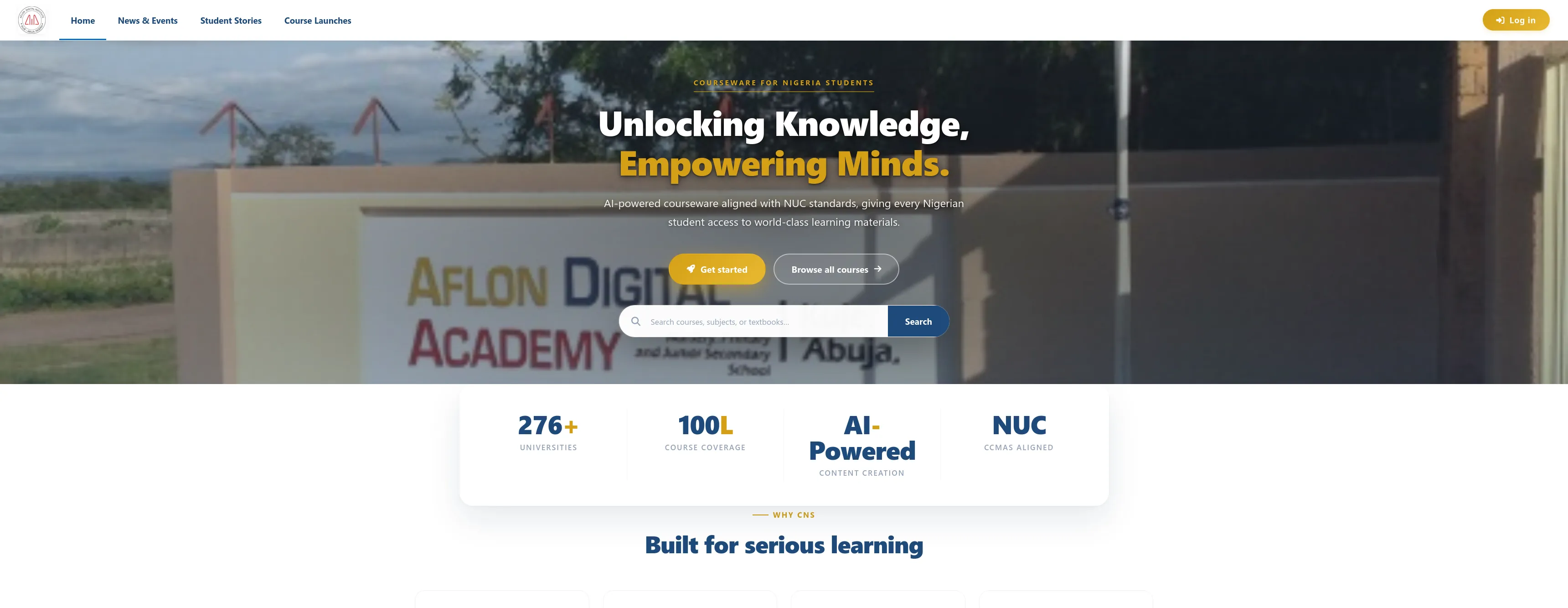 Open full-size screenshot in a new tab
Results and testing
One learner workflow across the stack
The source traces course fields into the public preview and checkout, then follows payment verification into the Moodle enrolment API and confirmation email.
A separate membership lifecycle
The membership plugin records pending references, checks incoming webhook signatures, extends the access window, and expires it through a scheduled task.
Next engineering milestone
Bind each payment to a server-created order and make the access grant safe to retry. Exercise duplicate notifications, mismatched orders, and a failed enrolment after a successful charge with local fixtures.
From Catalogue to Course
Learners needed to understand what a course included and what it cost before enrolling. I built those screens from Moodle’s course records so staff could maintain the underlying content in one place.
Build course previews and enrolment paths
I built the catalogue plugin, course preview, and checkout. Moodle custom fields supplied the price and duration, and the preview showed the course structure. Free courses used Moodle’s enrolment API. Paid courses verified the Paystack transaction on the server before calling the enrolment plugin.
Adapt the learner interface
I customized the existing Almondb theme on Moodle’s Boost foundation with CNS navigation, course layouts, and checkout templates. I added an inline PDF.js reader with a fullscreen option for learners reading course materials on smaller screens.
Membership and Platform Operations
Membership added a second access path. I gave it its own payment records, trial and expiry rules, and administrative workflow within Moodle.
Manage subscriptions and payment callbacks
I added configurable trial and free course allowances, recorded pending subscription payments before redirecting to Paystack, and built a signed webhook to process successful charges. A scheduled Moodle task marks expired memberships and the course entry hook applies the access rules.
Automate migrations and scheduled work
I wrote tooling to migrate course records and stored files, rebuild category paths, and run Moodle upgrades and cache refreshes. I also added cron setup and diagnostics that check the scheduler and run the Moodle CLI task runner.
Technologies
- Moodle 5.1
- PHP
- Mustache
- SCSS
- Paystack
- Nginx
- Bash